

Driving in Antigua and Barbuda: What to Expect
We've also heard some people say that driving in Antigua is stressful. While this hasn't been our experience, there are definitely certain essential things to know before getting behind the wheel.
Driving on the Left: Simpler Than You Think
We had never driven on the left before arriving in Antigua, and honestly, it proved to be much simpler than anticipated.
The only real problem? For a good 10 months, we systematically turned on the windshield wipers instead of the turn signals! 😂 And of course, taking roundabouts clockwise required a certain adjustment period.
Overall, no major problems, since the steering wheel is on the right side of the vehicle. On the other hand, I still don't know how people who rent US imported Jeeps with the steering wheel on the left manage (this brand of car is very much in demand with rental companies).
Local detail: you should know that in Antigua what is commonly called a "Jeep" is actually an SUV and not a Jeep brand vehicle!
Driving in Antigua: What Surprises You
First of all, you'll notice that people here park directly in front of where they want to go. Even if there's a parking space a few meters away, they'll stop exactly in front of the fruit stand or street barbecue where they want to make their purchases. Also, driving here sometimes feels like playing Mario Kart!
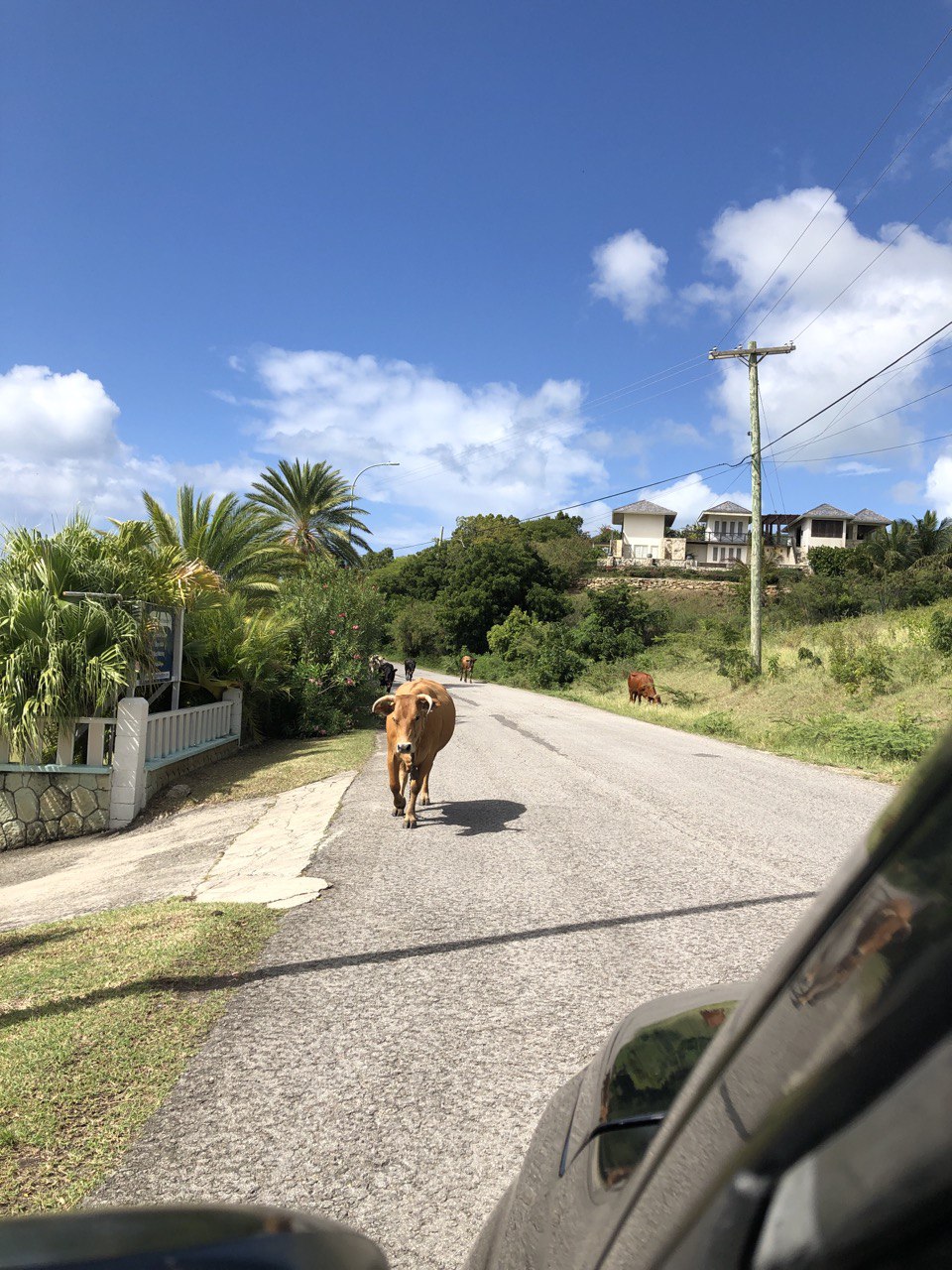
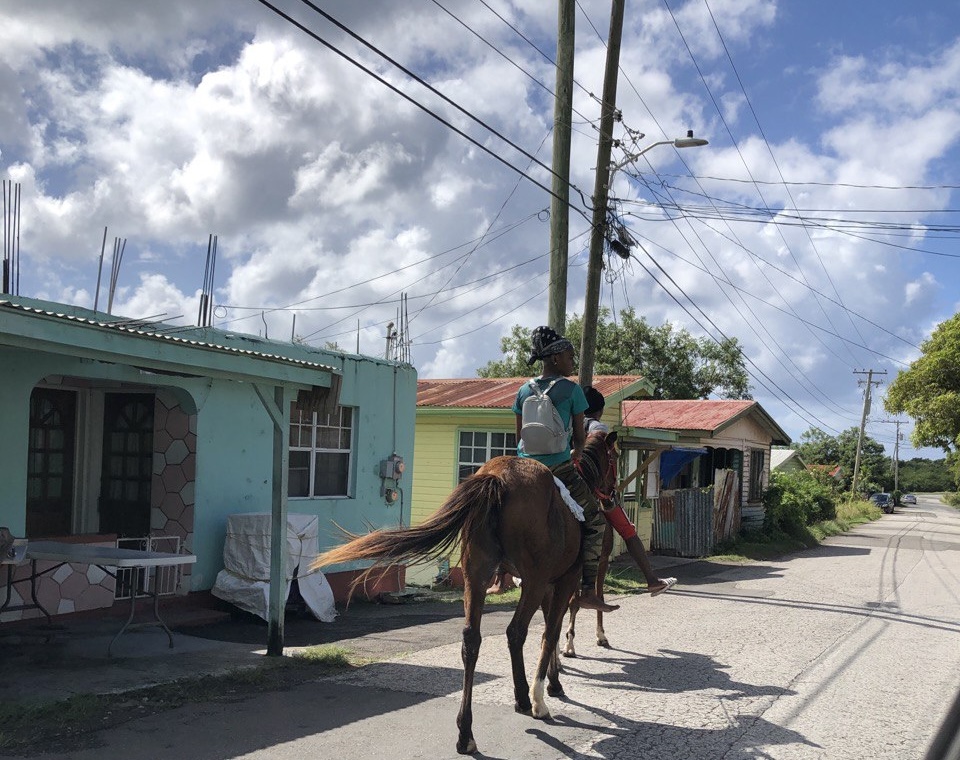
On the roads, you'll encounter donkeys, cows, chickens, dogs and cats. And since there are rarely sidewalks, you'll also find pedestrians walking along the road (often with their backs to traffic 😳), including children and even mothers carrying babies in their arms.
Also, reduced speed and increased vigilance are not only recommended, but absolutely necessary.
The State of Antigua's Roads
Although there are a few new roads, they are unfortunately rare. Many roads have potholes caused by sudden heavy rains (flash floods), hastily repaired with patches that age poorly. Several secondary roads are not paved at all and receive minimal maintenance. We live at the end of one of these dirt roads, and we can assure you that our car shows it!
There are also several speed bumps (without signs to indicate them), which are best crossed slowly if you don't want to damage your vehicle. You'll often see drivers of low cars approach speed bumps diagonally, which means they end up facing you during the maneuver. It's surprising the first time!
Once again, a measured speed remains your best option.
Investing in an SUV type vehicle is also highly recommended.
Courtesy and Horn Usage
When we tell you to drive slowly, rest assured that you will (almost) never get honked at for it in Antigua. Drivers behind you will simply pass you as soon as they have the opportunity. No stress whatsoever.
On the other hand, you'll hear constant honking here. People honk when they pass an acquaintance. They honk twice briefly to say "thank you," to which you must respond with a short honk to say "you're welcome." They also honk when overtaking you to signal their presence, in case you hadn't seen them.
If you want to turn right and there's oncoming traffic, don't panic and just wait. Someone courteous will eventually flash their headlights to invite you to turn (and you'll have to thank them with two short honks 😀).
Driving in Antigua: What Can Be Frustrating
Driving at night is exhausting, and we know we're not the only ones avoiding it as much as possible (which isn't easy when night falls around 6 PM in summer and 5 PM in winter).
Why? Many drivers here drive with their high beams on. I don't understand this dangerous practice since in the halo of blinding headlights it's difficult to see a pothole, a pedestrian or an animal on the road.
Roundabouts are also a source of frustration for us. While priority is indeed given to vehicles already in the roundabout, entering the roundabout is done with priority to the right.
This means that if there's a road to your right with a lot of traffic, those vehicles enter directly while you have to wait (sometimes for a long time) before you can enter in turn. This creates significant traffic jams on certain roads, which completely defeats the very purpose of roundabouts intended to make traffic flow smoother! It's quite different from Canada where we come from, where courtesy leads drivers to let vehicles enter in order of arrival at the roundabout.
The speed of some drivers who cheerfully pass you can also be somewhat alarming (especially when they fail to use their indicators). This category often includes buses and taxis, but not exclusively.
Stay calm and let them pass. However, when you yourself are passing other vehicles, exercise caution.
Driving in Antigua: What Can Be Dangerous
When you pass a stopped bus, be extremely vigilant!
People may come out in front of the bus and cross the street without even looking beforehand. Not to mention that the bus may also start without the indicator. Don't forget to give a honk to let them know you're passing!
At night, pedestrians and animals are difficult to see (even more so when an oncoming driver has their high beams on). Day or night, don't forget that a pedestrian may suddenly cross without looking, or that a cat or dog may appear out of nowhere.
Stay constantly on your guard. Avoid excessive speed, as you must watch out for other motorists, but also pedestrians and animals that may be on the road, and avoid potholes.
Tips for Driving Safely in Antigua and Barbuda
Drive at a moderate pace (why exceed 50 km/h on a small island where your destination will never be more than 60 km away?) and cautiously. Remain patient with local driving customs and vigilant for unexpected obstacles.
With these precautions in mind and accepting a more relaxed pace, you'll find that driving in Antigua is much less stressful than you'd imagine (certainly less than in Paris or Rome 😀) and can even become an enjoyable part of your island adventure!
_________________________
Some Practical Information
Driver's License
To drive in Antigua and Barbuda as a visitor, it's necessary to obtain a temporary local driver's license. This costs 20 USD (or 50 EC) and can be purchased from a car rental agency, a police station or directly from the Transport Board.
Most rental agencies take care of this for their clients. To obtain it, you'll need to present a valid driver's license issued in your country of residence. This local license is valid for a maximum of three months.
New residents, on the other hand, must go to the Antigua & Barbuda Transport Board (ABTB) to obtain a local driver's license valid for one to three years. Required documents vary depending on the issuing country of your current license.
Haven Antigua can handle these procedures for you!
Speed Limits
Speed limits are generally 40 km/h (20 mph) in urban areas and 60 km/h (40 mph) on main roads, unless otherwise indicated. You'll notice that there are few road signs and therefore few signs indicating a speed limit.
What to Do in Case of a Collision
In Antigua and Barbuda, there is no mutual accident report. In case of an accident, it's mandatory to remain at the scene and wait for the police to arrive. The authorities also specify that "leaving the scene of a road accident constitutes an offense, unless the person is injured and goes to the hospital to receive medical care."
Seat Belts and Some Peculiarities
Wearing a seat belt is mandatory in the front of the vehicle. In case of violation, the fine can reach 500 EC.
In Antigua, it's not uncommon to see passengers sitting, or even standing 😳, in the back of pickups or trucks: it's allowed! It's also legal to ride a motorcycle without a helmet!